Keeps the official record
The master securityholder file: who owns what, as a matter of law. Not a copy, not a dashboard: the record a court, an auditor, or the SEC would ask for.
AKRU is a transfer agent registered with the SEC. The recordkeeping for your securities is operated by a regulated entity held to federal standards. It's the institutional backbone most tokenization vendors don't carry.
Registration effective July 4, 2026 · SEC File No.
Strip away the statute language and a transfer agent does five jobs. Every one of them is a legal obligation, and every one of them lands on the fund if nobody regulated is carrying it.
The master securityholder file: who owns what, as a matter of law. Not a copy, not a dashboard: the record a court, an auditor, or the SEC would ask for.
Tracks every security issued and retired so the shares outstanding always reconcile. Nothing enters or leaves the register without an accounted-for event.
Re-registers ownership when a security legitimately changes hands, validating the transfer, updating the register, and issuing the new holder's record.
Federal rules require searches for lost securityholders and defined handling of unresponsive payees and unclaimed distributions. This is the obligation sponsors most often don't know they have.
The SEC's 17Ad rules set turnaround times for transfers, recordkeeping and retention requirements, and periodic reporting. Registered agents are examined against them.
Most tokenization vendors provide software that tracks ownership. They are not the regulated entity responsible for it, which means the recordkeeping obligation still sits with your fund, or with a third-party agent you pay separately and reconcile against. AKRU collapses that split: the platform that runs the fund and the registered agent that keeps its records are the same system.
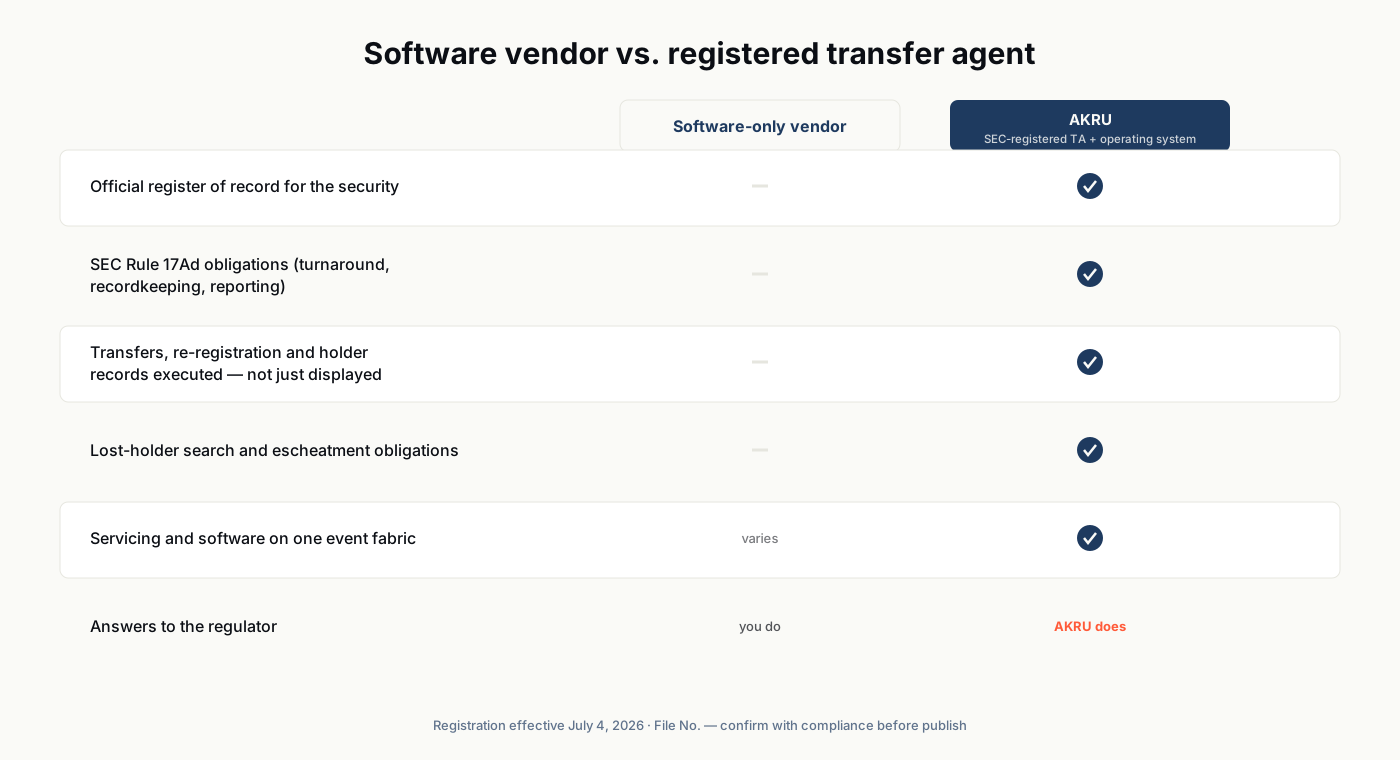
When your transfer agent is SEC-registered, your fund's answer to "who maintains your register, and to what standard?" changes category. It becomes: a regulated entity, registered with the SEC, subject to examination, operating under federal recordkeeping and turnaround rules. That answer holds up in LP diligence questionnaires, in fund audits, and in regulatory inquiries, because it points to a public registration, not a vendor contract.
It also means accountability has an address. A registered agent's obligations (accuracy of the register, timely transfer processing, lost-holder searches, retention) are enforceable against the agent. With a software-only stack, those obligations don't disappear; they quietly remain yours.
In a traditional stack, the transfer agent's register, the administrator's cap table, and the sponsor's distribution spreadsheet are three documents that have to be reconciled into agreement. On AKRU they are one record on one event fabric: an onboarding, a transfer, or a distribution is a single event that updates the register, the cap table, and every downstream figure at once. K-1 allocations derive from the same record the transfer agent maintains, so the numbers tie by construction, not by quarterly cleanup. Compliant transfer and re-registration workflows are built in; a regulated secondary venue is on the roadmap.

A transfer agent maintains the official record of who owns a security (the master securityholder file), acts as registrar so shares outstanding always reconcile, processes transfers and re-registrations, handles lost and unresponsive holders under federal rules, and meets SEC turnaround and reporting obligations under the 17Ad rules.
Yes. AKRU's transfer-agent registration is effective July 4, 2026. The registration is public and verifiable on SEC EDGAR.
A token balance is a representation of ownership; the official register is a legal obligation. A registered transfer agent is the regulated entity accountable for that register. Most tokenization vendors provide software that tracks ownership. They are not the entity responsible for it.
Yes. Transfer-agent services can be engaged standalone. Funds that also run on the AKRU platform get the additional benefit of one event fabric: the register, the cap table, and the servicing engine are the same record.
Appointing AKRU is a registrar change: your holder records, positions, and history are imported and reconciled onto the platform as a recordkeeping migration. Your fund documents and your investors' holdings are unchanged; the register simply has a new, regulated home.
A 15-minute call on what registered recordkeeping changes for your offering.